
Join the Chicken Challenge
Join the Chicken Challenge and let’s halve campylobacter food poisoning
The FSA wants to cut the number of cases of campylobacter poisoning in half by the end of 2015. It could mean that over a hundred thousand fewer people would get sick next year. If everyone does their bit including industry and consumers this can happen. Pledging to take the Chicken Challenge and to do at least one thing to help keep our tummies safe and healthy will make a huge difference in helping to achieve this goal.
The FSA is asking you to step up to the plate and promise to:
• Bag and store raw chicken separately from other food, covered and chilled on the bottom shelf of the fridge
• Not to wash raw chicken as it splashes germs
• Wash everything that’s touched raw chicken in soap and hot water – your hands and utensils
• Check chicken is cooked properly – no pink meat, steaming hot and the juices run clear
Scams and fraud
Scams & Fraud
According to the Metropolitan Police, scams cost the British public Billions (yes – that’s Billions) of pounds every year. They come door-to-door, by mail, phone and online and they get more sophisticated every day and are a widespread problem. A Which? Survey in 2015 found that 54% of respondents had either personally been exposed to a scam, or had a friend or relative who had been, within the last 2 years. How can we protect ourselves from this onslaught?
There is a wealth of information online about how to recognise scams and fraud, and give details about the wide range that have been identified. The Little Book of Big Scams (little_book_scam) and the Scam Guide are two excellent resources.
It is unfortunately true that we all have to put time, effort and resources into keeping ourselves safe from all forms of crime. That is the world we live in. Reading the examples in the resources presented above is well worthwhile. But there are two general principles that will help to keep you from falling prey to scams and fraud.
- “If it sounds too good to be true, it probably is!”
- Do not respond to “cold callers”.
Think: did you do anything to initiate the contact? If not, then do not reply. We do not like to be rude to somebody at the door or on the phone. You don’t have to be rude; just say “No thank you” and shut the door or put the phone down. Don’t fall for the “I’m not selling anything, I am just doing a survey for …..”. If it arrives in the mail, just put the letter or flyer in the bin.
Online scams and fraud are increasing rapidly. Suspect emails may be routed to your Spam or Trash folders by your ISP. Delete them without even opening them unless you are very sure that you recognise the sender (some emails do get directed incorrectly by the ISP but be careful if you accept them). Phishing emails, that appear authentic and to originate from authoritative sources such as your bank, are becoming more prevalent. It is very likely that you will have received emails from supposed banks with which you do not even have an account. They should be easy to spot! Your bank or companies like Amazon will never ask you for sensitive information to be sent to them by email. Never respond to such emails or click on links they contain, even if you think they might genuine. If you want to check, get their phone number from your account statement and call them. And, whatever you do, never, ever click on a link in an email. It might appear that it will take you to your bank web site but it is easy to set it up to take you elsewhere.
You can avoid some unwanted phone calls by registering with the Telephone Preference Service. Unfortunately, this does not prevent all unwanted calls and scammers are least likely to abide by their rules. For a small cost, you can purchase a call blocking device that attaches to your phone and allows you to receive only calls you want to accept. BT also has a range of phones with the built-in capability of call blocking.
Helping Blind & Partially Sighted Get Online
 Online Today – RNIB

Our Online Today team supports blind and partially sighted people to get online and access digital services. We support people of all abilities to access new technologies like Kindles, Smartphones, Tablets (iPads/Android) and laptops.
We help complete beginners and those who want to brush up on their skills.
Our team offer individual support that includes:
- An introduction to using a computer and the internet
- Support to set up an email account and social networking pages such as Twitter and Facebook
- Getting the best deals by paying bills online
- Shopping online
- Uploading and sharing digital photographs
- Chatting online using Skype
- Product demonstrations including Kindle, Smartphones and Tablets like iPads/Android
- Advice about software
- Referral to other agencies and RNIB services
For more information about the project contact us on
029 2082 8518 or email [email protected]
You can download a referral form here: RNIB Referral Form
“Care to Listen…..? Listen to Care”
50+ F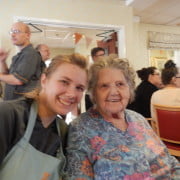 orum are working closely with the RVS, in a pro
 ject called “Listen to Care….Care to Listen”, within Caerphilly Borough. We have two members on the project board, the Council’s Older Persons Development Officer and the Chairman of the Forum. Volunteers carry out interviews with residents and their families to discover if they have ideas about how things might be improved. The project is introduced to each care home via a “tea party”. You can see from these photos how much fun this event is.